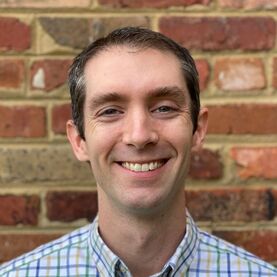
Principal Investigator
|
Adrian Gilmore
Adrian is an Assistant Professor in the Department of Psychological and Brain Sciences at the University of Delaware. As an undergraduate, he double majored in Psychology and Classical Civilizations at Colby College. He then spent several years working as a lab manager & research assistant for Daniel Schacter at Harvard University. He completed his PhD in Psychological and Brain Sciences at Washington University in St. Louis, where he was a graduate student in Kathleen McDermott's lab. He then became a postdoc, and later a research fellow, in the Laboratory of Brain and Cognition at the National Institute of Mental Health, where he worked with Alex Martin. Adrian is broadly interested in the cognitive and neural systems associated with human memory retrieval. Outside the lab, Adrian can be found rock climbing, chasing frisbees, or playing Mario Kart with his 6-year old daughter. |
Graduate students
|
Mervenur Ayyildiz
Mervenur is a first-year Cognitive area PhD student in the Psychological and Brain Sciences program. She completed her BA in Psychology at Marmara University in Turkey, and her MSc in Psychology, Neuroscience and Human Sciences at the University of Pavia in Italy. She conducted her thesis research on memory reconstruction at the University of Glasgow under the supervision of Prof. Maria Wimber. She has been working on memory research for the past six years, and she is mainly interested in the dynamic nature of autobiographical memories. Outside the lab, she can be found traveling, baking, and having FaceTime calls with her cat, Fındık. |
Heaven Dixon
Email
Heaven is a 2nd year Bridge scholar who joined the lab after completing her BS in Psychology at Mississippi State University in 2024. She is currently investigating differences in the perception of real and artificially-generated photographic stimuli. She is planning to apply the skills she learns in the lab to a PhD program cognitive neuroscience or neuropsychology.
|
Amanda Holt
Amanda is a Psychological and Brain Sciences PhD student in the Cognitive area. She received a Bachelor of Science in Psychology and a Bachelor of Fine Arts in Ballet from the University of Utah. Amanda previously worked with Dr. Cory Inman in his lab as both a research assistant and lab manager. Amanda’s research focuses on the neural and cognitive mechanisms that support recognition memory, with particular interest in how the parietal memory network distinguishes novel from familiar experiences. Outside of her research, Amanda enjoys dancing ballet, reading, cooking, and spending time in nature. |
Undergraduate research assistants
|
Sofia DiCostanzo
Sofia DiCostanzo is an undergraduate student at the University of Delaware double majoring in neuroscience and dance. She currently is assisting in investigating perception of real and AI generated stimuli. She is also interested in the parietal memory network, motor sequence learning, prospective memory, and connecting neuroscience to dance. In the future, she hopes to complete a PhD program in neuroscience, and eventually lead her own research. Outside of academics, Sofia serves on the executive board of the National Honor Society of Dance Arts at UD, and is a member of Impact Dance Company. |
Nonhuman research affiliates
|
Ori Gilmore
A somewhat clumsy feline with a mysterious past, Ori can often be found poking his ears into Zoom calls, sleeping in a patch of sun, or ambushing unsuspecting toys. His interests lie in trans-species prospective memory: he wants to optimize the conditions under which his adopted humans will remember to give him treats. |
|
Fındık Ayyildiz
Fındık investigates novel techniques for attentional capture in humans. Using her keen scent memory, she tracks the frequency with which Merve offers “scratchies” to other cats—likely for nefarious purposes. Nevertheless, she is patiently waiting for Merve to finish her PhD and return home so that their play sessions can resume. |